Behavior Observations
Unsafe environmental conditions and mechanical failures are easy enough to manage with systems like inspections and hazard assessments, but what about incidents that might have been affected by human behavior, like fatigue, haste, distraction, poor habits, or workers simply taking a risk? How do you identify those hazards and build a culture to root them out? Systematic observations can help bring these behaviors and attitudes to light. Behavior observations can be considered hazard assessments of a worker’s mind and body.
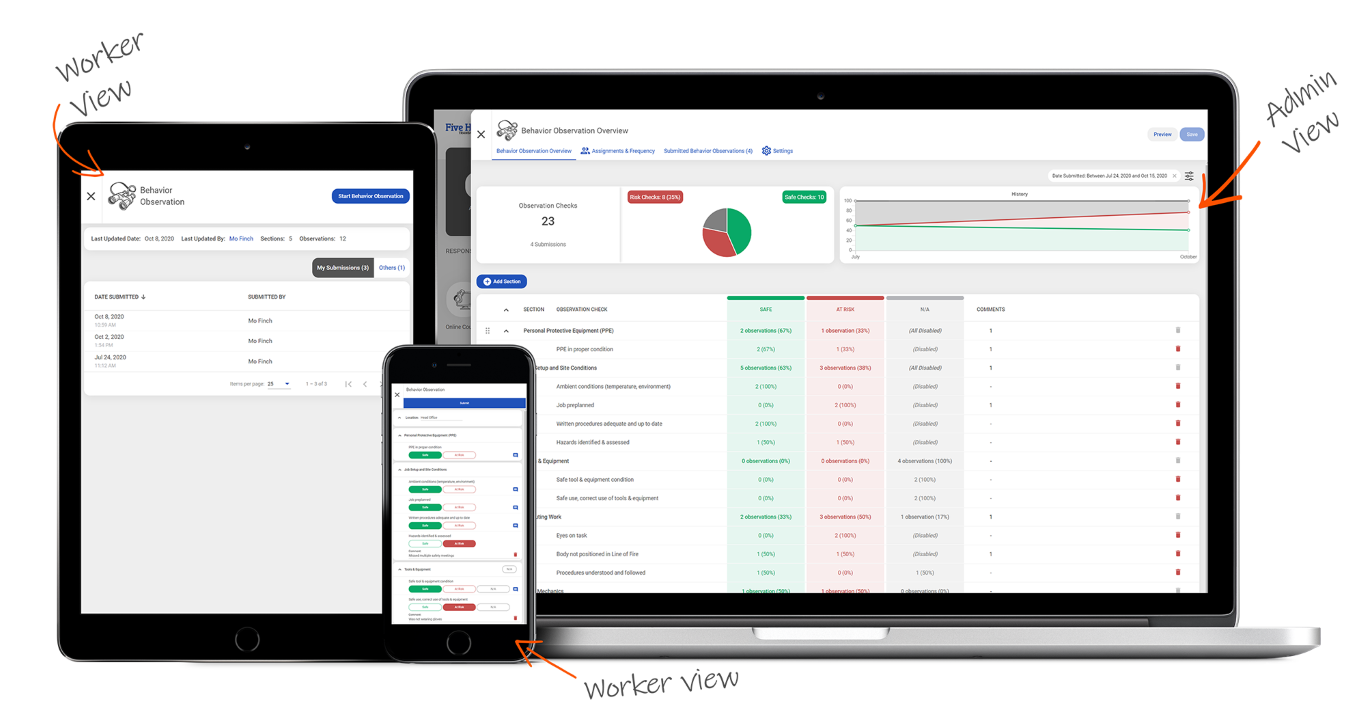
Not pointing fingers ...
The concept of behavior-based safety isn’t meant to cause debate on whether workers are responsible for unsafe acts or if they are the root cause of injuries and quality issues. Instead, behavior-based safety simply suggests that undesirable behaviors can contribute to unwanted outcomes that can be identified and corrected. Not every organization will embrace behavior-based safety, but if you do, we have the tool to make it work.
... but gaining insight!
Creating a Behavior Observation checklist starts with identifying workplace behaviors that contribute to unwanted outcomes. Prior hazard assessments and incident reports are a good place to look for these behaviors, and reviewing root cause analysis may identify a few more. Don’t worry if your list isn’t very long, because Workhub has dozens of behaviour templates from which to pick and choose. Here are a few examples:
- Proper housekeeping (cleanliness, storage, access)
- Correct tool or equipment for the task
- PPE worn correctly
- Mind on task (not distracted)
- Not rushing
- Not overexerting
- Stretches and takes micro-breaks
- Not lifting, bending or twisting
- Avoid repetitive motions
- Comfortable (not awkward) position
Keep in mind when creating your list that behaviors are not task-specific, so it isn’t useful to add a behavior for “Operates backhoe safely”. (Our Competency tool is what you’ll want to use for task-specific assessments.)
Set up your template
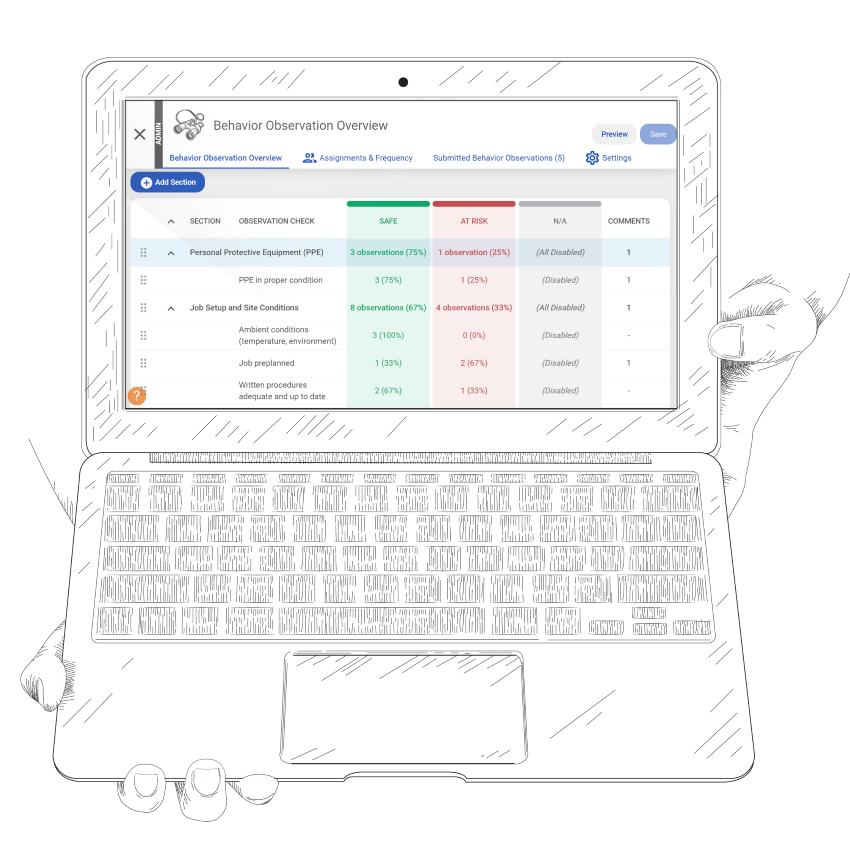
After creating your checklist, you can decide whether all behaviors need to be observed or whether some are not always applicable to each observation. If you decide N/A is not a valid choice, then “Safe” and “At Risk” become the only available selections. You can group the behaviors into sections, such as Body Mechanics, Job Setup, or Executing Work, and sort your behaviors within each grouping. After tailoring your checklist, you can assign it to your organization by Position or by Location, depending on your needs. You can set it as optional or required and set a frequency for how often it needs completion.
It’s important to note that Behavior Observations aren’t meant to identify the worker being observed. Rather, they’re intended as an insight into your workplace’s overall safe practices. Workers can be provided recommendations along the way, but observations shouldn’t single them out!
Let your workers observe
Before firing up Behavior Observations, you might want to assign our Behavior Based Safety course in Online Training, or maybe write a Policy or Procedure on how they should be done. But, we digress...
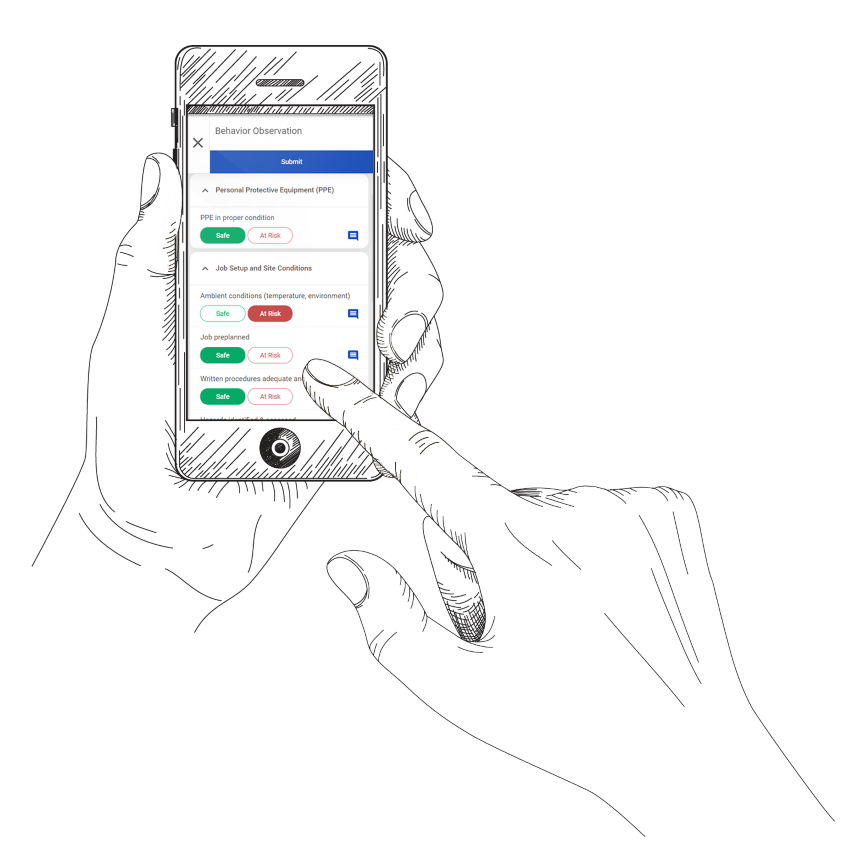
Workers with permissions for Behavior Observations can navigate to the dash module and choose to start an observation. It’s usually a good idea to let the coworker know they’re being observed doing their job, and feedback can be provided along the way (or at least afterwards!). The observation form is optimized for mobile devices, so workers can observe anywhere they need. Observers identify the Location they’re observing and choose Safe, At Risk, or N/A for each check and can leave comments for each.
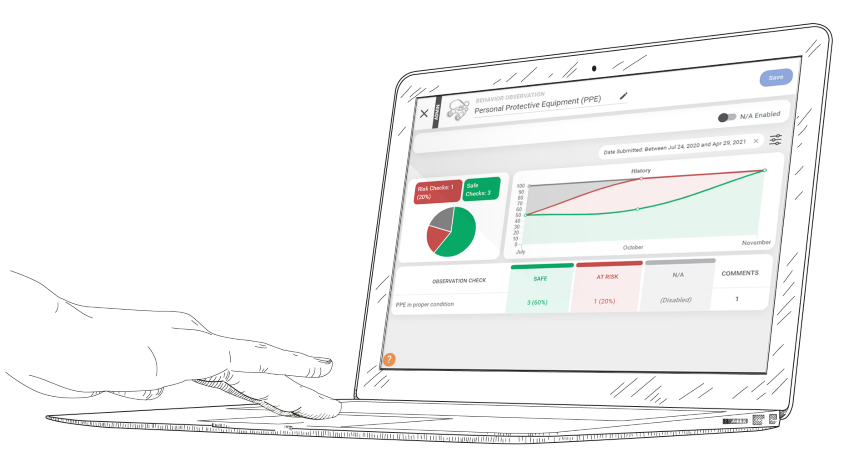
After submission, statistics will start to pile up on the Admin dashboard. They’ll give you insight into what behaviors are most at risk to you can tailor your training, procedures, safety meetings, bulletins, and other tools to help mitigate hazards and reinforce desired behaviors!
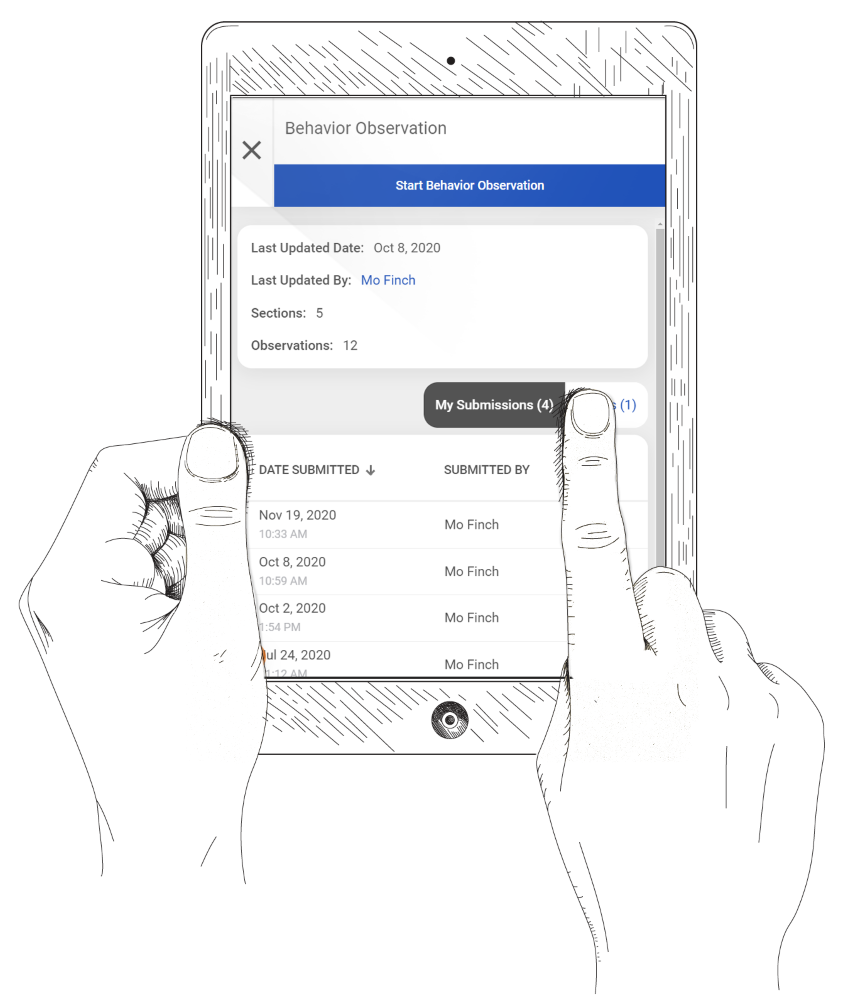
Overview
Behavior-Based Safety Observation
Observe employees in their day-to-day activities to ensure that they are exhibiting behaviors and attitudes that contribute to a safe workplace.
Identify
Identify behaviors that contribute to unwanted outcomes at your workplace and build checklists to sign-off on.
Assign
Assign observations by position and location.
Designate
Choose staff or supervisors that are qualified to assess other employees.
Analyze the Results
Filter your submissions by date and track the results over time.
Still have questions?
Let our knowledgeable sales team give you a full product tour and answer any specific questions you may have.